Many people arrive in the UAE on a visit visa and later decide to stay for employment, family sponsorship, education, investment, or business opportunities. Fortunately, the UAE allows eligible visitors to convert their visit visa into a residence visa through a legal process known as an in-country status change. This means that, in many cases, applicants do not need to leave the UAE to obtain residency.
Before beginning the process, it is wise to regularly check UAE visa status to ensure your current visa remains valid and to avoid overstaying penalties. Understanding the conversion process can help you transition smoothly from a temporary visitor to a legal resident of the UAE.
This guide explains the requirements, eligibility criteria, documents, costs, and step-by-step process for converting a UAE visit visa into a residence visa in 2026.
Understanding the Difference Between a Visit Visa and a Residence Visa
A UAE visit visa is a temporary entry permit that allows individuals to enter the country for tourism, family visits, or short-term business activities. It does not grant the right to live permanently in the UAE or work without proper authorization.
A residence visa, on the other hand, permits long-term stay in the UAE and may allow employment, business operations, property ownership benefits, or family sponsorship depending on the visa category. Residence visas may be issued for periods ranging from one year to ten years, depending on the visa type and eligibility.
Can You Convert a Visit Visa to a Residence Visa Without Leaving the UAE?
Yes. The UAE offers an official “status modification” or “in-country status change” process that allows eligible visitors to convert their visa status while remaining inside the country. Instead of exiting and re-entering on a new visa, applicants can complete the conversion through immigration authorities such as ICP or GDRFA.
However, the conversion is not automatic. Applicants must first qualify for a valid residence visa category and obtain the necessary approvals before the status change can be processed.
Who Can Convert a Visit Visa to a Residence Visa?
Several categories of applicants may qualify for residence visa conversion.
Employment Visa Holders
One of the most common pathways involves securing employment with a UAE-based company. The employer obtains the required work permit and residence visa approvals before initiating the status change process. Still looking for work? A UAE job seeker visa lets you stay legally while you search, so you can convert to a residence visa once an employer sponsors you.
Family Sponsorship
Residents may sponsor eligible family members, including:
- Spouses
- Children
- Parents (subject to eligibility requirements)
Once sponsorship approval is obtained, the visitor can proceed with residence visa conversion.
Investor and Business Owners
Individuals who establish businesses or invest in eligible UAE ventures may qualify for investor or partner residence visas.
Property Owners
Certain property investments may qualify owners for residence permits, subject to applicable regulations and investment thresholds.
Students
Students accepted by recognized UAE educational institutions may obtain residence visas sponsored by their university or institution.
Golden Visa Applicants
Professionals, entrepreneurs, investors, researchers, and other eligible individuals may qualify for long-term residency through the UAE Golden Visa program.
Documents Required for Visa Conversion
Requirements vary depending on the visa category, but applicants generally need:
Basic Documents
- Valid passport
- Copy of current visit visa
- Passport-size photographs
- Entry permit approval
- Sponsor documents (if applicable)
Additional Documents
Depending on the category, applicants may also require:
Employment Visa
- Employment contract
- Work permit approval
- Company sponsorship documents
Family Visa
- Marriage certificate
- Birth certificates for children
- Sponsor’s salary and residency documents
Investor Visa
- Trade license
- Company ownership documents
- Investment records
Student Visa
- Admission letter
- Educational institution sponsorship documents
Incomplete documentation is one of the leading causes of application delays.
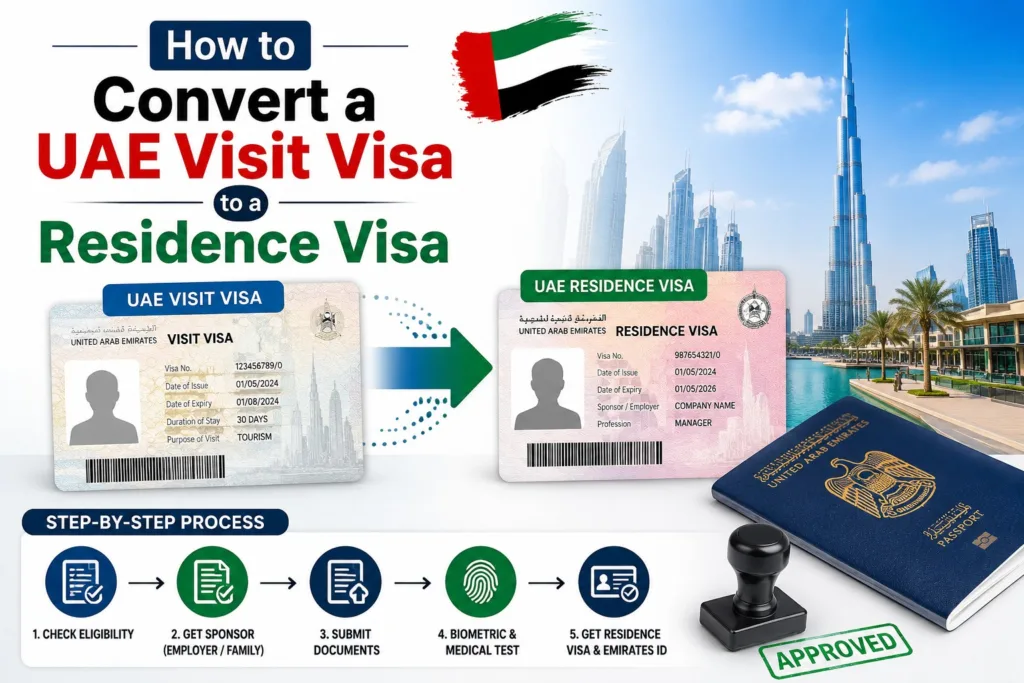
Step-by-Step Process to Convert a Visit Visa to a Residence Visa
Step 1: Secure Eligibility
Before applying for conversion, you must qualify for a residence visa category such as employment, family sponsorship, investment, property ownership, or study.
Step 2: Obtain Residence Entry Permit Approval
The sponsor or applicant submits the required application through the relevant authority.
Depending on the emirate, applications may be processed through:
- ICP (Federal Authority for Identity, Citizenship, Customs and Port Security)
- GDRFA Dubai
- Authorized typing centers
- Amer service centers in Dubai
Once approved, the residence entry permit becomes the basis for the status change.
Step 3: Submit Status Change Request
After obtaining approval, an in-country status modification request is submitted.
This step officially converts the applicant’s status from visitor to resident without requiring departure from the UAE.
Step 4: Complete Medical Fitness Test
Applicants aged 18 years and older must undergo a medical fitness examination at an approved medical center. This typically includes health screening tests required for residency approval.
Step 5: Apply for Emirates ID
Following medical clearance, applicants must complete Emirates ID registration and biometric procedures. The Emirates ID serves as the primary identification document for UAE residents.
If your emirates id is expired, you can also renew your emirates id online, check this article for procedure
Step 6: Residence Visa Issuance
After all approvals, medical tests, and Emirates ID requirements are completed, the residence visa is activated digitally within the immigration system. Physical visa stamps are generally no longer required as residency information is linked electronically.
How Long Does the Conversion Process Take?
Processing times vary depending on the visa category and emirate.
Typical timelines include:
| Stage | Estimated Time |
| Entry Permit Approval | 2–10 business days |
| Status Change | Few hours to a few days |
| Medical Test | 1–3 days |
| Emirates ID Processing | 3–10 days |
| Residence Visa Issuance | 1–7 days |
In many cases, the complete process can be completed within two to six weeks.
What Happens If Your Visit Visa Is About to Expire?
Timing is extremely important.
Applicants should begin the conversion process before the visit visa expires. Overstaying can result in fines and may complicate future immigration procedures. Authorities generally require applicants to maintain valid immigration status throughout the conversion process.
If your residence visa application is still pending, consult your sponsor or immigration service provider regarding extension options or status management.
Benefits of Converting to a UAE Residence Visa
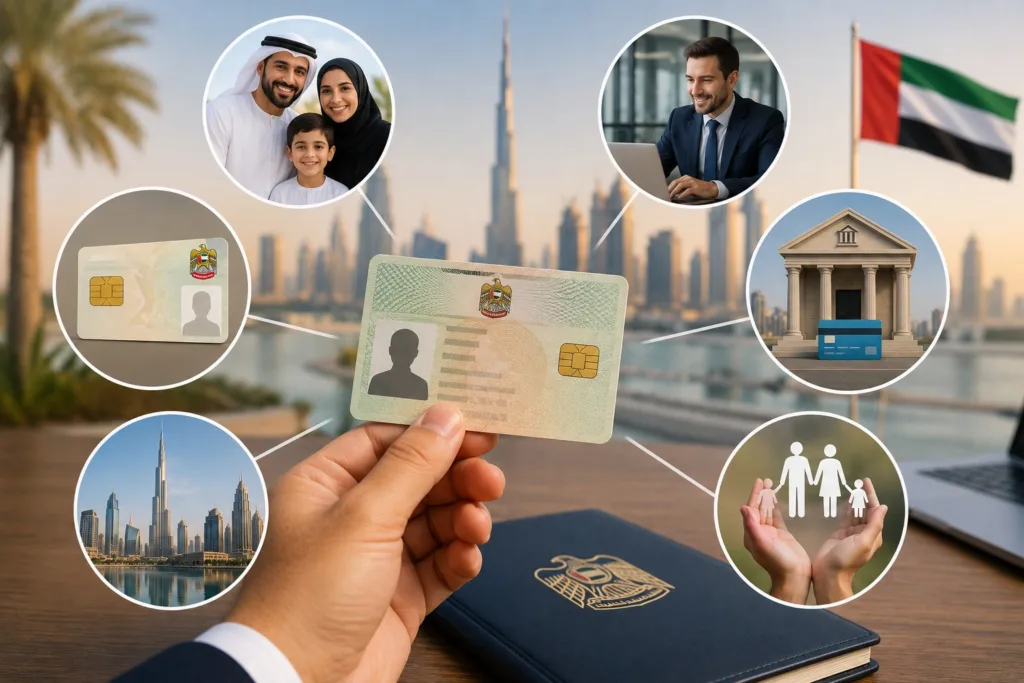
Obtaining a residence visa provides numerous advantages.
Legal Long-Term Stay
Residents can legally live in the UAE for the duration of their visa validity.
Employment Opportunities
Employment-based residence visas allow individuals to work legally in the UAE.
Access to Banking Services
Most UAE banks require valid residency status to open and maintain certain account types.
Emirates ID Benefits
Residents receive Emirates IDs, which are required for many government and private sector services.
Family Sponsorship
Eligible residents may sponsor family members under UAE immigration regulations.
Long-Term Residency Options
Qualified applicants may access long-term residency programs such as the Golden Visa and other specialized residence categories.
Common Mistakes to Avoid
Waiting Until the Last Minute
Begin the process well before your visit visa expires, especially if you’re planning to transition from a UAE visit visa.
Working Without Authorization
A visit visa does not authorize employment. Individuals must obtain proper work permits and residency approvals before starting employment.
Submitting Incomplete Documents
Missing documents remain one of the most common reasons for delays and rejections.
Ignoring Status Updates
Regularly monitor application progress and respond promptly to any requests from immigration authorities.
Conclusion
Converting a UAE visit visa into a residence visa has become more streamlined thanks to the UAE’s in-country status change system. Whether you have secured employment, received family sponsorship, started a business, purchased property, or qualified for a long-term residency program, the process can often be completed without leaving the country.
The key to a successful conversion is ensuring eligibility, preparing complete documentation, maintaining a valid visa status, and following the required immigration procedures carefully. By planning ahead and understanding each step, applicants can transition smoothly from visitor status to legal residency and begin enjoying the many benefits of living in the UAE.